SoftsWeb@softsweb
YouTube videos · by SoftsWeb
I Used REA to Clone OpenAI's Codex
A video demo where the author gives Claude Code only the installed files of OpenAI's open-source Codex (no source) and has it rebuild the non-interactive CLI engine in Python, making REA and Ghidra mandatory tools. The resulting clone passes 416/422 hidden checks (98.6%), with the test kit, REA and Codex repositories linked.
About this case
The author shows a reverse engineering workflow: scan the installed Codex files, make real Codex respond, define a hidden test, then let Claude Code rebuild the program in Python, first without and then with REA and Ghidra mandatory. Notes that Codex is Apache-2.0 open source, that only non-interactive codex exec mode was reproduced using a fake AI server, and that the full Ghidra analysis of the 294 MB binary timed out, so only a carved 15 MB piece was opened with REA. Links to the hidden-test-kit repository and the REA GitHub project are provided.
Setup
See the original source for installation instructions.
Original text / README
I Used REA to Clone OpenAI's Codex
I gave Claude Code only the files that OpenAI's Codex installs on a computer, with no source code at all, and asked it to rebuild the program in Python while a hidden test I wrote beforehand decided if the copy was good enough. REA, the open source reverse engineering tool, is the one it was supposed to use.
The first copy scored 99% on my easy test and only 75.4% on a much harder one, so I made REA and Ghidra mandatory. The second copy passed 416 of 422 checks (98.6%) and the whole AI bill for both rounds was about $16.80. Everything on screen is replayed from the real logs and results.
0:00 Two terminals, one secret 1:08 The one rule that makes it fair 1:44 Step 1: what is inside the file 2:29 Step 2: making the real Codex talk 3:31 Step 3: the hidden test 4:12 Step 4: the first copy 4:50 Step 5: a much harder test 5:32 Step 6: Ghidra and REA get their turn 6:43 The verdict 7:40 What this really means
Links Test kit from this video (the hidden test, the fake AI server and the AI's notes): https://github.com/softsweb/codex-clone-hidden-test-kit REA on GitHub: https://github.com/morluto/rea Codex on GitHub (open source, Apache-2.0): https://github.com/openai/codex
Notes and honesty
- Codex is open source (Apache-2.0), that is why I picked it. I did not do this to Cursor or Claude Code because their terms forbid it.
- I only copied Codex's non-interactive mode (codex exec). The copy has no screen and no model, it is only the engine, and I used a fake AI server so the test cost nothing.
- Not tested: the real sandbox (it does not start on my computer), the interactive screen, resume and review commands, and a real model.
- The full Ghidra analysis of the 294 MB program never finished (every call timed out after 330 seconds), so I show exactly which parts worked: a carved 15 MB piece of the file that REA could open.
- Remaining misses (6 checks of 422): the real program rejects a tiny image that the copy accepts, the copy does not count tokens used by a goal, it lacks the codex-path folder in PATH, and it does not print the applied patch.
- Only analyze software you are allowed to test. I am not a lawyer and this is not legal advice.
- This video is not sponsored.
#REA #Codex #ClaudeCode #ReverseEngineering #OpenSource
Similar projects
Developer describes using REA (a reverse-engineering skill for AI agents) to inspect TCL's BrowseHere APK, finding Firebase analytics, TCL ads and pre-ticked data-sharing settings, then having Claude build Sofa TV Browser — an open-source, GPL-3.0 Android TV browser with remote-friendly UX, tracker blocking, no analytics and no backend. Hosted on GitHub, distributed as an APK.
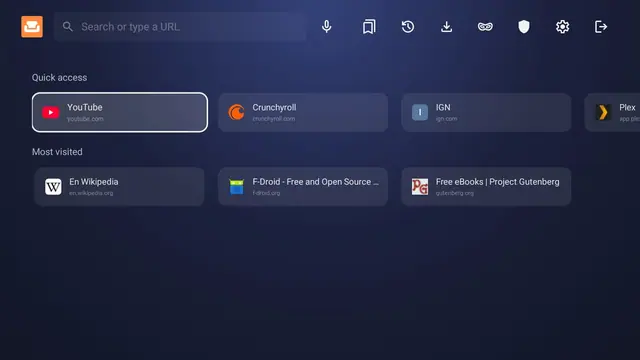
I had AI reverse-engineer TCL's BrowseHere and build a private, open-source alternative: Sofa TV Browser
Stars 5
Traces a page-facing API in Notion's packaged JavaScript through its IPC wrappers to the system clipboard and shows how an HTML marker links rich block data to a copy.
rea / How Notion copies text an
❯ /How▰▰▰▰▰▰▰▰ App feature recreation
✳︎ How Notion copies text and HTML
└─ Make every conversation easier
Text preview · Not a project screenshot✳︎ How Notion copies text and HTML
└─ Make every conversation easier
How Notion copies text and HTML
Stars 0

az9713@az9713
An agent analysed only the shipped Windows binary of an open-source puzzle game, wrote its findings, froze them, rebuilt the game as a web page and was graded against the real source (52 of 54 claims correct).
Untangle rebuilt from REA evidence only
Stars 0