TranslatedAbout this case
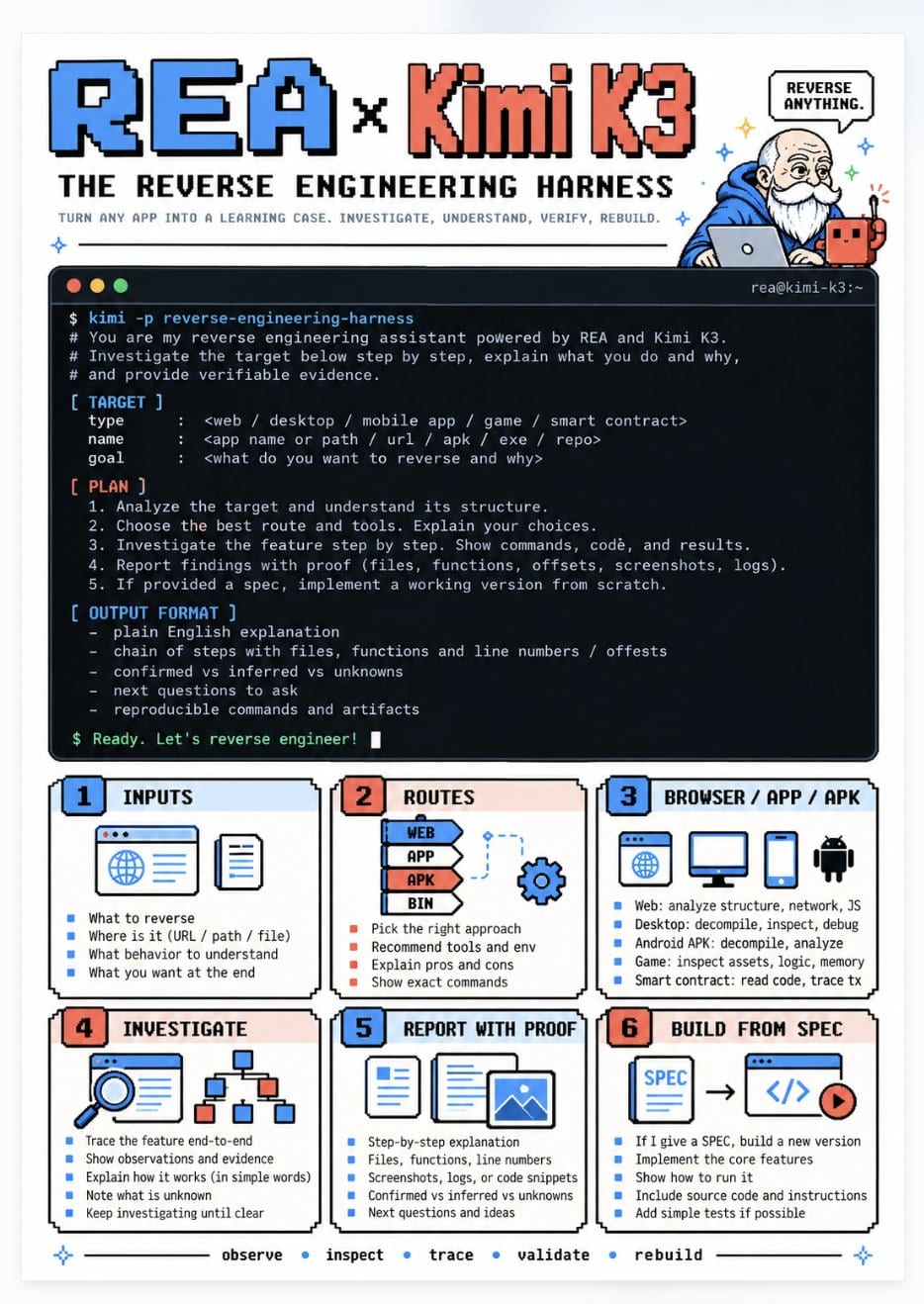
This is the REA harness I’d use before trying to reverse engineer anything.
give it the target, tell it what behavior you want to understand, and it builds the investigation around that instead of blindly digging through files.
it figures out the route, traces the feature end-to-end, keeps confirmed facts separate from guesses, and comes back with evidence you can actually inspect.
the useful part is the output:
• what the system is doing
• where the behavior lives
• which files / functions matter
much better than asking an LLM “explain this app” and getting a confident story with no proof.
prompt + workflow below ↓
Setup
See the original source for installation instructions.
Original text / README
This is the REA harness I’d use before trying to reverse engineer anything.
give it the target, tell it what behavior you want to understand, and it builds the investigation around that instead of blindly digging through files.
it figures out the route, traces the feature end-to-end, keeps confirmed facts separate from guesses, and comes back with evidence you can actually inspect.
the useful part is the output:
• what the system is doing
• where the behavior lives
• which files / functions matter
much better than asking an LLM “explain this app” and getting a confident story with no proof.
prompt + workflow below ↓