dansugc@dansugc
dansugc/reverse-engineer-marketing
一个受 REA 启发的开源 CLI 和 MCP 服务器,可将公司的公开营销机器——付费广告、自然社交媒体、SEO、创始人、漏斗——逆向工程为有证据引用的行动手册。
dansugc/reverse-engineer-marketing
REM 接收一个链接,并收集有关公司增长引擎的公开信号:Meta/Google/LinkedIn 广告库、Apple Search Ads 存储库、跟踪像素和 GTM 容器、站点地图和程序化 SEO 系列、对 AI 爬虫的立场、Wayback 定位历史、TikTok/Instagram/YouTube/X/LinkedIn 个人资料、创始人、Reddit 和 Hacker News 活动以及商店列表。所有内容都以带有证据 ID 的观察或推导形式存储;未检查的项目会报告为未知项,且绝不编造支出。证据包输入一个确定性的记分卡,然后 Claude 或用户自己的代理(Claude Code / Codex 通过 MCP,使用 REA 风格的 investigate → spec → build → verify 提示词)撰写一份带引用的报告,验证器会检查引用是否可解析、主张是否有依据。它明确将 REA(morluto/rea)列为其灵感来源,仅读取公开数据,并指导用户研究策略,而不是重新发布竞争对手的创意或文案。
安装方法请查看原始来源。
Paid ads · organic social · SEO & AI search · founders · funnel · positioning history, with the evidence for every claim.
<code>npx reverse-engineer-marketing notion.so</code>
Quick start · Web app · What it finds · Use it from your agent (MCP) · Example report · How it works
</div>Nobody shares their growth alpha anymore. But most of it is public if you know where to look: ad libraries show which ads have been running for months (the winners), pixels show which platforms they buy, sitemaps show programmatic SEO, Wayback shows every repositioning, and founders post their playbook in public.
REM collects all of it from one link and turns it into a report: what the company's growth engine is, how the channels connect, and a step-by-step playbook to copy it. Every fact cites the evidence it came from, and everything REM couldn't see is listed as unknown, with a link to check it yourself.
Inspired by REA (Reverse Engineer Anything), but for marketing instead of binaries.
[!TIP] Found their winning ads? Make your own. REM is built by DansUGC: 5,000+ real-creator UGC reaction clips and custom videos for paid ads and organic, from $5 a clip. Copy the hooks, skip the creator hunt. Get UGC for your ads →
Try it with zero setup, no keys: a recorded Cal AI teardown opens in the web app.
npx reverse-engineer-marketing demo
Then run it on any company:
npx reverse-engineer-marketing linear.app
That works with no API keys: website, tracking pixels (including pixels hidden inside Google Tag Manager containers), SEO/sitemaps, AI-crawler stance, Wayback positioning history, App Store/Google Play and Hacker News.
Add keys to unlock the rest:
export SCRAPECREATORS_API_KEY=...   # ad libraries, social stats, founders, Reddit (~25–50 credits per run)
export ANTHROPIC_API_KEY=...        # the written strategy report (Claude)
npx reverse-engineer-marketing calai.app
Output goes to ./rem-reports/<domain>-<date>/: report.md plus evidence.json (the raw evidence bundle).
It also accepts App Store and Google Play links: rem https://apps.apple.com/us/app/…/id123.
rem <url> [--no-ai] [--json] [--only paid,social,seo] [--handle tiktok=name] [--out dir]
rem web              # local web app (Claude Code / Codex subscription)
rem demo             # recorded Cal AI teardown in the web app, no keys
rem diff <domain>    # what changed since the last run: new/killed ads, growth, repositioning
rem setup            # connect REM to Claude Code / Codex (shows the plan, asks before changing anything)
rem doctor           # which sources your keys unlock
rem mcp              # run the MCP server
npx reverse-engineer-marketing web
Opens a local web app at http://localhost:4321. Paste a link, pick who writes the report, and watch the evidence come in and the playbook stream out. Every E12 citation opens the raw evidence behind it.
The Posts & ads tab is a review library of everything collected: Meta ads (active and paused, with creatives, inline video, run length, variants, top-by-impressions), Google and LinkedIn ads, TikTok and Instagram videos, YouTube, X and LinkedIn posts (company and founders), and Reddit threads and brand/founder replies. Filter by platform, sort by top / newest / longest running, open any original. The rail shows the brand logo and the founders with photos, roles, LinkedIn/X audience and a confidence badge.
| Report writer | How it runs | Cost |
|---|---|---|
| Claude Code | your installed claude CLI, headless, no tools | your Claude subscription |
| Codex | your installed codex exec, read-only sandbox | your ChatGPT subscription |
| Anthropic API | ANTHROPIC_API_KEY | per token |
| Evidence only | no AI | free |
Subscription engines run the CLI you're already logged into. REM strips ANTHROPIC_API_KEY / OPENAI_API_KEY from their environment so your plan is used, not an API key, and runs them in a scratch folder with your MCP servers and hooks disabled. The server listens on 127.0.0.1 only and rejects other hosts and origins. Add your Scrape Creators key from the top-right pill; it's saved to ~/.config/reverse-engineer-marketing/config.json (mode 600). Past runs are listed on the home page.
| Area | What REM pulls | Needs a key? |
|---|---|---|
| Paid: Meta | All ads incl. paused campaigns, active count, most-shown ads, ads launched in the last 30 days, longest-running active ads (the proven winners) with hooks, formats, CTAs, landing pages, UTM campaign names, variant counts | Scrape Creators |
| Paid: Google | Ads pointing at the domain, formats, recency, and other advertisers bidding on the brand (affiliates/resellers) | Scrape Creators |
| Paid: LinkedIn | Ads by the company, ad types, headlines, CTAs | Scrape Creators |
| Paid: Apple Search Ads | From Apple's public Ad Repository (EU): App Store ads over the last year, how many still serve, placements, formats, the message each ad shows, markets, audience targeting, and copycat apps advertising under the same name | Free |
| App Store link forensics | In Meta ads that point at the App Store: custom product pages (ppid), campaign tokens (ct/pt), attribution parameters | Scrape Creators |
| Pixels & stack | Meta/Google/TikTok/LinkedIn/Reddit/X/Pinterest/Snap pixels with IDs, including inside GTM containers; attribution SDKs (AppsFlyer, Adjust, Branch); affiliate tools; email/CRM; visitor-ID tools (RB2B, Warmly, Koala, Clearbit) that reveal an outbound motion; A/B testing | Free |
| Organic social | TikTok, Instagram, YouTube, X, LinkedIn: followers, posts/week, median reach, top posts and hooks, spark ads, days since last post. Finds TikTok even when the site doesn't link it | Scrape Creators |
| SEO | Sitemap size and folders, programmatic page families (/integrations/{app}, /{a}-vs-{b}, /templates/…), comparison/alternatives pages, content cadence, locales, top Google results | Free (+1 credit) |
| AI search (GEO) | llms.txt, which AI crawlers are blocked or allowed | Free |
| Founders | Names from Wikidata, the site's JSON-LD and about page (free), plus LinkedIn and Google search; ranked by confidence; LinkedIn/X audience, photo, recent posts | Free names; enrichment Scrape Creators |
| Reddit marketing | Brand/founder posts and replies, owned subreddit activity, comparison and "what should I use" threads, organic recommendations, Reddit threads ranking on Google | Scrape Creators |
| Brand logo | apple-touch-icon, LinkedIn logo, App Store icon, JSON-LD, Wikidata, Instagram avatar (best first, with fallbacks) | Free |
| Community & launches | Reddit threads and subreddits, Hacker News launches and points, Product Hunt | HN free; rest Scrape Creators |
| Funnel & monetization | Positioning, CTAs, pricing model, free plan/trial, per-seat/usage, sales-led signals, affiliate program and commission, social proof | Free |
| Apps | App Store ratings (download proxy), release age, update cadence, Play installs | Free |
| Positioning history | Homepage title/H1/CTAs over time from the Wayback Machine: pivots and repositioning | Free |
Run REM on the same company again next week, then:
rem diff calai.app
You get the deltas: Meta ads in the library and live now, ads launched, Apple Search Ads volume, follower growth per platform, sitemap growth, channels that switched on or off, homepage repositioning, and which ads and posts are new or no longer running.
REM is an MCP server, so Claude Code, Codex, Cursor, or any MCP client can run it. With MCP you don't need an Anthropic key: your agent writes the report itself.
One command, with a plan you approve first (it backs up anything it replaces):
npx reverse-engineer-marketing setup        # detects Claude Code / Codex, shows the plan, asks
npx reverse-engineer-marketing setup --dry-run
Or by hand:
# Claude Code
claude mcp add reverse-engineer-marketing -e SCRAPECREATORS_API_KEY=... -- npx -y reverse-engineer-marketing mcp

# Codex
codex mcp add reverse-engineer-marketing --env SCRAPECREATORS_API_KEY=... -- npx -y reverse-engineer-marketing mcp
Any other client:
{
  "mcpServers": {
    "reverse-engineer-marketing": {
      "command": "npx",
      "args": ["-y", "reverse-engineer-marketing", "mcp"],
      "env": { "SCRAPECREATORS_API_KEY": "..." }
    }
  }
}
Then ask:
Reverse engineer the marketing of linear.app and give me a playbook I can copy.
| Tool | What it does |
|---|---|
| reverse_engineer_marketing | Collects everything for a URL. Returns a compact scorecard + evidence index + unknowns (token-cheap) and a run_id |
| get_evidence | Full data for specific evidence ids or a source (ad copy, top posts, sitemap families…) |
| get_playbook | The analysis method: role, evidence rules, report template, lessons, and per-channel playbooks |
| get_content | The actual ads, videos and posts (media URLs, run length, live/paused) to quote or show |
| compare_runs | What changed between two runs of the same company |
| validate_report | Checks the agent's report: citations resolve, sections exist, playbook grounded, no invented spend |
| write_report | Optional server-side report (needs ANTHROPIC_API_KEY in the server env) |
Named MCP prompts your client can run in one click (the REA pattern: investigate → spec → build → verify):
| Prompt | What it does |
|---|---|
| investigate_company | Full teardown: evidence → playbook → cited report → validation |
| compare_competitors | 2–4 companies side by side: who wins each channel, gaps, the best play to copy from each |
| what_changed | Re-run + diff against last time: new angles, killed ads, growth, repositioning |
| steal_the_playbook | Investigate → spec → build: a 30-day plan for your product with ad hooks, UGC briefs, landing outline, posting calendar, SEO template |
| audit_unknowns | What REM couldn't see and the fastest way to check each by hand |
Paste into Claude Code / Codex once REM is connected:
Reverse engineer the marketing of calai.app. Lead with their longest-running ads and quote the hooks.

Compare notion.so, coda.io and clickup.com: which channel does each one win, and what's the one play I should copy from each?

What changed at linear.app since my last run? New ad angles, ads they killed, audience growth.

Steal the playbook: reverse engineer calai.app, then build a 30-day plan for my app (myapp.com) with 10 ad hooks adapted from their winners and 3 UGC video briefs.

Which competitors bid on App Store search in Europe for "calorie tracker"-type apps, and what message does each show?
Install the bundled skill to teach your agent the workflow: copy skills/reverse-engineer-marketing/ into ~/.claude/skills/ (or your agent's skills folder).
link ──► website scan ──► discovers socials, apps, people, brand
              │
              ├─► pixels + GTM containers      ├─► Meta / Google / LinkedIn ad libraries
              ├─► robots, sitemaps, llms.txt   ├─► TikTok / IG / YouTube / X / LinkedIn
              ├─► Wayback history              ├─► founders (LinkedIn + X)
              └─► App Store / Play / HN        └─► Reddit / Product Hunt
                                │
                    evidence bundle (E1…En) + unknowns
                                │
                  deterministic channel scorecard (no AI)
                                │
             Claude / your agent + the harness ──► report.md
                                │
                    validator (citations, grounding)
Evidence contract. Every item is an observation (seen at a URL or API) or a derivation (computed, e.g. posts/week). The report's interpretations must cite evidence ids and label inferences. Anything not checked is an unknown, never "they don't do it". A pixel means intent, not current spend, and dollar spend is never invented.
The harness is a versioned file bundle (harness/): analyst role, guardrails, report template, a cue → lesson library, and one playbook per channel. Every report records the harness version and SHA. Change a playbook, run npm run eval, and compare scores. Recorded evidence bundles in evals/fixtures/ let you iterate on the prompt without re-scraping.
Cost per full run: about 25–50 Scrape Creators credits plus one Claude call (default claude-opus-5, override with REM_MODEL). Scrape Creators responses are cached for 24h in ~/.cache/reverse-engineer-marketing so agents can re-run without paying twice.
REM reads public information only: public web pages, public ad transparency libraries (Meta, Google, LinkedIn, Apple), public social profiles. It never logs in as anyone, never touches private data, and never runs anything on the target.
Same rule as clean-room engineering: study the strategy, ship your own. Learn which angles, offers, channels and page templates work, then make your own creatives and copy. Don't republish competitors' ads, footage, copy or brand assets; that's their IP. Respect each site's terms and your local laws.
git clone https://github.com/dansugc/reverse-engineer-marketing && cd reverse-engineer-marketing
npm install
npm run dev -- notion.so --no-ai   # run from source
npm test                           # unit tests (parsers, scorecard, validator)
npm run eval                       # validate example reports against recorded fixtures
npm run eval -- --live             # regenerate with Claude and score (costs tokens)
Adding a source: write a collector in src/sources/ that adds evidence to the store (observations or derivations, never conclusions) and records unknowns with a manual-check link, then teach src/analyze/scorecard.ts what it means. See AGENTS.md.
<a href="https://dansugc.com/?utm_source=github&utm_medium=oss&utm_campaign=reverse-engineer-marketing"><b>DansUGC</b></a> is where the ads in these reports come from: real human creators, real reactions. Browse 5,000+ UGC reaction clips and b-roll, order custom videos from vetted creators, or let the ReelClaw agent assemble and post reels for you. If REM showed you a competitor winning with UGC, that's the shortcut.
MIT. Built by DansUGC.

REA 是一个开源 MCP 工具,将 AI 代理和 CLI 用户连接到逆向工程工作流,涵盖原生二进制文件、JavaScript/Electron 应用、.NET 程序集、Android APK、固件和运行时捕获,返回带有支持证据的发现结果。
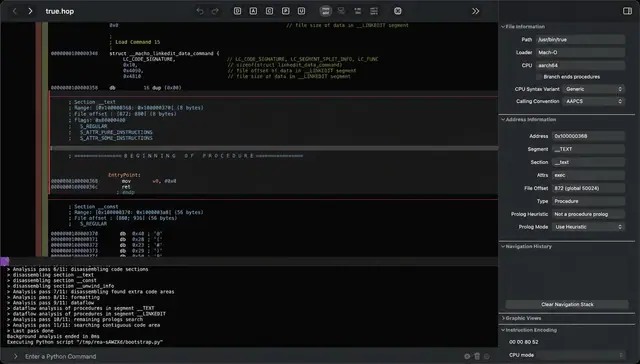
8 KB 的技能文件替掉一整套 MCP leanrea 用 8 KB 的 skill 干 REA 的活,不给 agent 挂 MCP 服务器和 207 个工具。作者实测快 38%、便宜 35%。 https://github.com/aicodeking/leanrea

ReVa 是一个 Ghidra 扩展,提供 MCP 服务器,让 AI 语言模型通过工具化接口与 Ghidra 交互,支持 assistant 模式与 headless 模式,并能配合 Claude Code、VSCode 等 MCP 客户端使用。

第三方 Cordis bundle,将本机已安装的 rea mcp(stdio)注册进 DeepSeek Harness,让 REA 工具以 mcp__rea__* 形式在会话中调用;本身不进行逆向分析,并允许将 GHIDRA_INSTALL_DIR 等引擎环境变量限定于该 MCP 子进程。
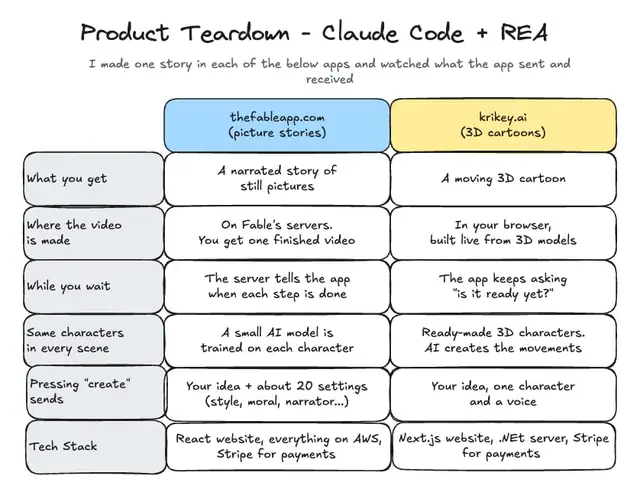
作者描述了如何使用 REA 配合 Claude Code 逆向工程 AI 故事动画产品:他们在使用每个应用时记录了请求和响应(仅字段名),然后让 Claude 将捕获的流量整理成结构化拆解报告,涵盖技术栈和设计决策。他们将其打包为一个免费的“product-teardown”技能,分享在 GitHub 上,供 Claude Code 或 Codex 使用。

关于 REA(Reverse Engineer Anything)的第三方深度研究报告。REA 是一个开源 MCP 服务器和 CLI,让 AI 编码代理无需源代码即可检查软件、追踪执行以解释行为,并帮助重建功能。报告涵盖 REA 的架构、其证据契约(result + evidence_id + limitations)、Hopper/Ghidra/IDA 提供程序、增长时间线(5.0.0 到 6.4.0,133+ 个 MCP 工具)、DX-Ball 和 Notion 展示案例、仅本地信任模型、项目声明的限制、美国/欧盟/中国的法律背景,以及与 ghidra-mcp 和传统工具的竞争格局。